
In our articles on the 1961-90 era, we’ve already touched upon the introverted nature of the Turkish music industry in Germany, and in fact went a step beyond to compare the music industries of Germany and Turkey to parallel universes. Let’s just say that exceptions prove the rule, because in the following interview we will be sharing with you one of the few overlaps that have ever occurred between those universes.
Frontman Nedim Hazar shares with #60JahreMusik the story of Yarınistan, the band that made its mark on the disco charts of the 80’s and 90’s with its ethnic rock songs and on history with four albums, over 200 concerts and a German Record Critics’ Award. The group was founded by Geo Schaller together with Nedim Hazar, who was also the soloist.
He is also making a project to bring different generations in Germany together on a stage, "Deutschlandlieder: German Folk Songs". Also his newly released book that is entitled with the same name of the project looks through the Turkish culture since the recruitment agreement. And according to Murat Güngör and Hannes Loh, “Hazar even began rapping before his son [Eko Fresh] did. In ‘Ali-Rap’ – the more interesting B-side of ‘Sieh mich an’ (1990) – Hazar raps ironic observations on life in Germany over electronic percussion.”[1]
Translated to English by Zeynep Beler.
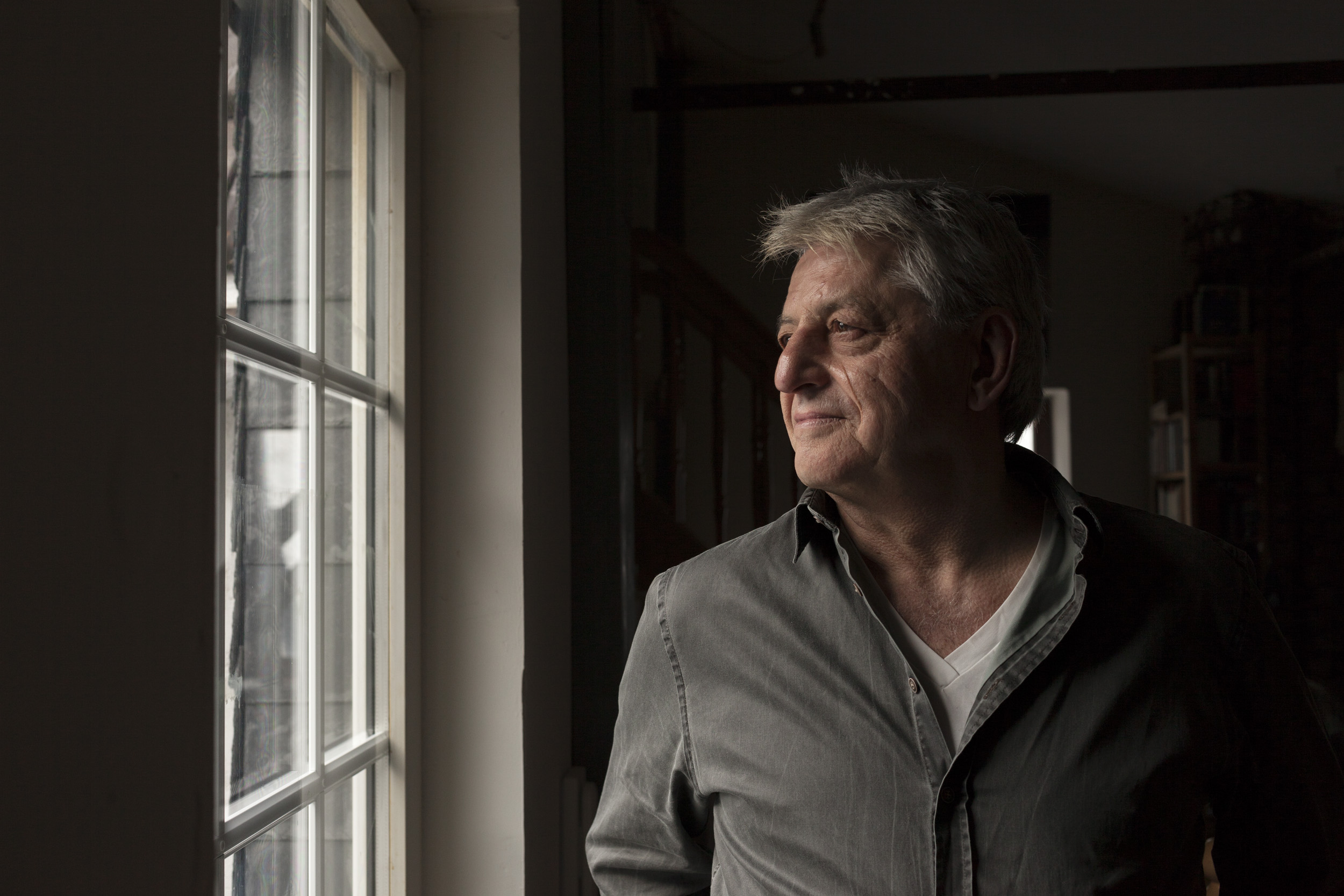
Nedim Hazar © Stephan Lucka
If we’re going to be talking about the late 80’s and early 90’s, that’s when we really began setting an example for burgeoning and prospective artists. We also did a few musicals. There was a massive surge in Islamophobia here around the time of the Gulf War. Drawing inspiration from the title of Woody Allen’s renowned film, we prepared a musical named “Alles was Sie schon immer über die Islam Wissen Wollten” (Everything You Always Wanted to Know About Islam But Were Afraid to Ask”).
Our second musical was titled “Dieses Gericht enthält keine Schweinefleisch” (“Our Dishes Do Not Contain Pork”).
So you see, I feel like we set a precedent in a lot of places we went because these issues weren’t really on Germany’s agenda at the time. In terms of music, Metin Türkoz, Yüksel Özkasap, and Derdiyoklar sold many records but mostly stayed on their own turf.
Only Cem Karaca transcended the limits of Turkish music but, as you know, he returned to Turkey later on. So for a while we were the only ones on the scene.
Accused of “inciting strike through accordion-playing”, Nedim Hazar fled from the military junta of the 1980’s to Germany. In 1983, he founded a band with musicians he met while acting in the city theater, a Turkish-German band in the professional sense of the word. Germans formed the band’s majority and their oeuvre was composed mostly of German songs. “Morgenland” is German for the Orient and becomes “tomorrowland” when directly translated, the Turkish from which the band in turn derived its name: Yarınistan. Their first record was released in 1986 with the title “Morgenland/Yarınistan”, and they dropped Morgenland shortly after.
Before the Wall
“Before the wall came down, there was a spectacular peace movement known as ‘Künstler für den Frieden’ in which almost everyone, every big name from Udo Lindenberg to BAP, was involved. I myself was part of the movement’s Board of Directors, which meant that I was in close contact with the German musicians in the industry.
As for Turks, Fuat Saka was also here at the time. We had performed in concert with him a few times in the early days of Yarınistan. Burhan Öçal was in Sweden at the time, so we were in touch with him also.
Their most popular song, “Max und Gülistan”, tells a version of Romeo & Juliet that takes place between immigrants and Germans.
“Our second most popular song is the rather tongue-in-cheek ‘Türken Sind froh’ about Turkish workers, and was quite an incendiary song for its time. There’s a saying in German, ‘Zigeuner sind lustig,’ meaning, ‘Gypsies are cheerful’. We were inspired by that. The lyrics go:
Gypsies are cheerful, Turks are happy
They drink lots of rakı and clean the lavatory
World Disco Charts
Not only did they play over 200 concerts in both East and West Germany, but also went on world tours: to Britain, Denmark, the Soviets, Azerbaijan, Turkmenistan, Kazakhstan, and more.
They officially represented Germany in music competitions in Denmark and Britain.

© Yarinistan, Frankfurt, 1988
We went to the Soviets, we’re talking the Gorbachev era and it was the first time a Turkish artist had visited. İbrahim Tatlıses was the only Turkish artist anyone knew, they called him ‘İbrahim Tatlı Tatlı’ for that matter, but the halls were always packed anyway.
Their success on the disco charts wasn’t limited to Germany: they also entered the charts in Britain and even climbed to No. 1 in Canada.
At a time when world music as a concept wasn’t at all prevalent, they infused the folk dance Lorke with 80th disco beats.
Nedim Hazar draws parallels between Yarınistan’s sound at the time and Rachid Taha’s band Carte de Séjour (Residency Permit). “Back then, it was only them and us when it came to world music,” he adds. They also rubbed shoulders with Yeni Türkü of Turkey, he says, with Yarınistan’s sax player Geo Schaller performing in one of Yeni Türkü’s concerts in Germany.

Geo Schaller and Nedim Hazar © Yarinistan, Cologne, 1990
After the Wall
Before the wall came down in Germany, record sales were fantastic. Releasing 4 albums in total, the band was able to put food on the table for five families, says Nedim Hazar, when even today making a living off of music remains a challenge.
After the wall came down, the scene in Germany changed. Our band started losing its meaning, significance and reason for being. There were incidents of arson here in the 90’s. We all started questioning ourselves. Homes were being burnt down, and here we are still going up on the stage and singing, ‘Germans-Turks are lovely’.
For a time, the two founding members of Yarınistan, Nedim Hazar and Geo Schaller, put on political cabarets. With xenophobia and racism on the rise and the country increasingly occupied with a different agenda, the band broke up in 1994.

Nedim Hazar ve Geo Schaller © Yarinistan, Köln, 1991
Die Mampen and Deutschlandlieder
Although changing issues may have put an end to Yarınistan’s story, Nedim Hazar’s creative projects continue on.
In 2019, Nedim Hazar founded his new band Die Mampen. Exploring the stories of immigration-focused, “in transit” performers and songs such as Harry Belafonte, Coco Schumann, Manu Chao and rembetiko through musical revue performances, the Deutschlandlieder (German Folk Songs) project was born when the band eventually realized they had overlooked the stories of Turkish workers in Germany.
German Folk Songs
Within the scope of the project, a concert series is planned from October 2021 onwards in which musicians of various generations will perform “the most popular German folk songs”. Metin Türkoz and Ata Canani are amongst those slated to participate. Songs from those unable to attend, such as Yüksel Özkasap, aka Nightingale of Cologne, and Cem Karaca, will also be featured in the concert series.
Yarınistan: A Journey Through Time to Bygone Tomorrows
Yarınistan turned up the volume on world music from 80’s Germany. The irony in their multilingual lyrics raised issues for the day’s agenda. Their musicality carried them into charts in various countries and took them on world tours.
The story of Yarınistan is like a journey from the 80’s to its “tomorrows”, that is, to the post-migrant society of today: a time capsule swept between the multiverses of the Turkish and German music industries.

[1] Murat Güngör ve Hannes Loh, “Gastarbeiter” to Gangsta Rapper? Hip Hop, Migration and Empowerment in Germany 1960 – 2017” içinde, çev. Meredith Dale, 2017.
This piece is written in the framework of #60JahreMusik project financed by Berlin Yunus Emre Institute.


